Quick TAG Reports Guide
*Screenshots used for educational purposes only; full reports available via TAG links.
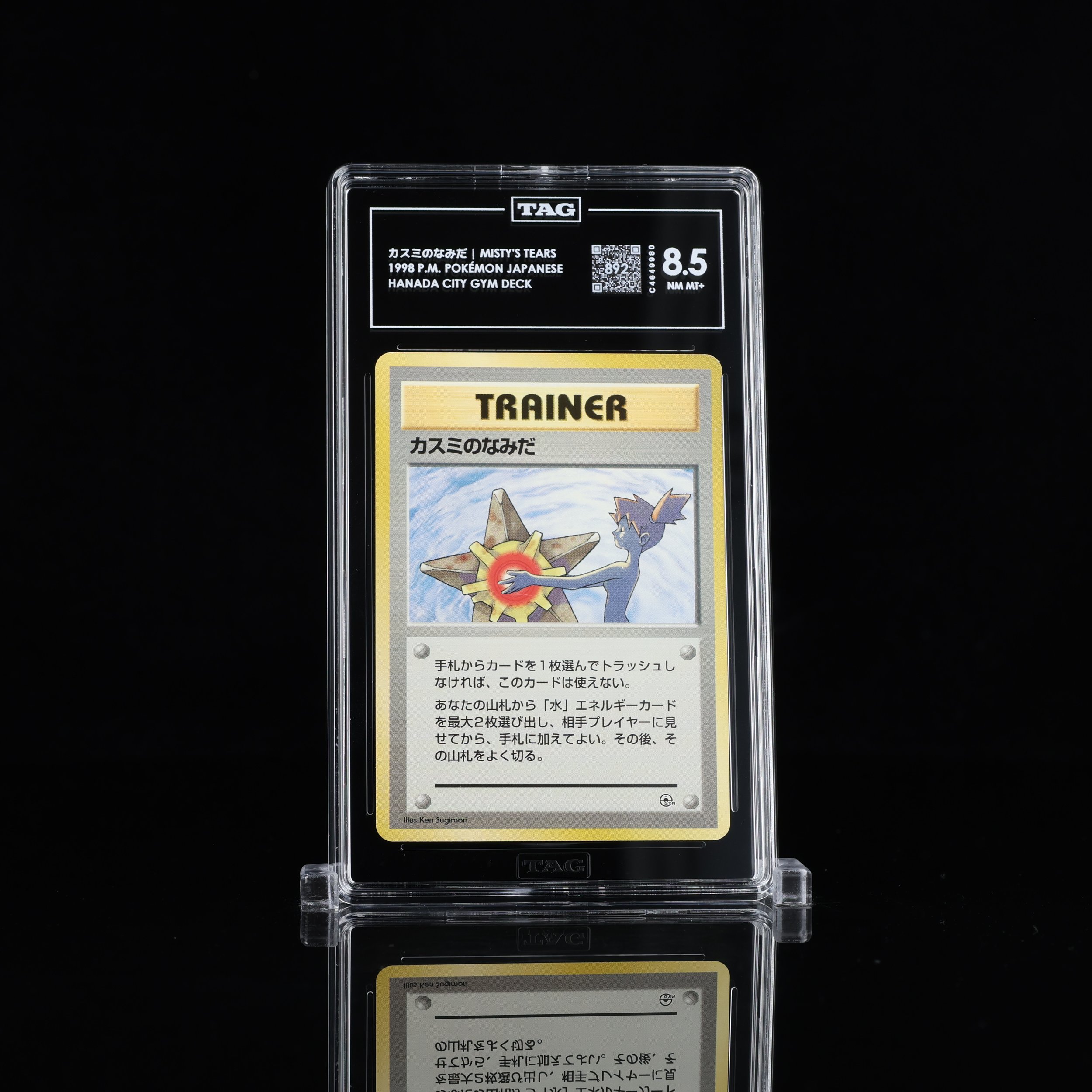
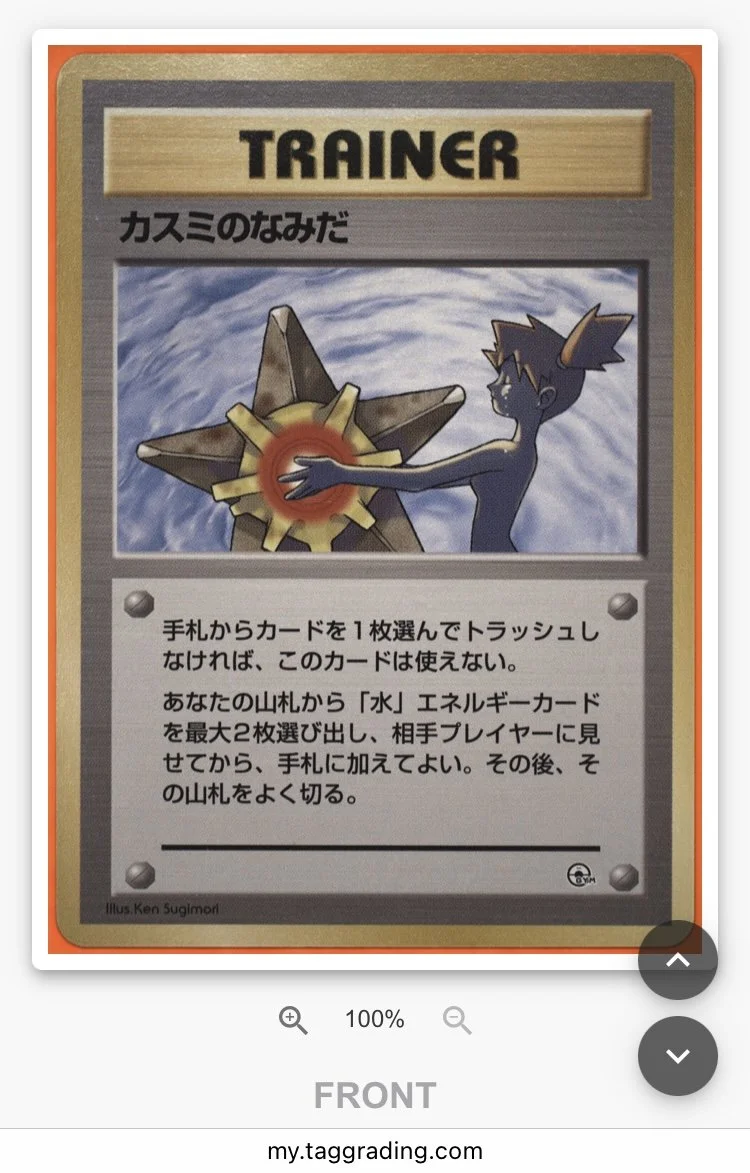
Welcome to our guide on understanding TAG grading reports. These detailed reports from TAG (Technical Authentication Grading) break down every aspect of a card's condition, from centering to surface defects. They serve as a clear roadmap to authenticity and value. In this guide, we'll use the Misty's Tears card from the 1998 Hanada City Gym Deck as an example—graded NM MT+ with a TAG Score of 892.
Key Components of a TAG Report
TAG reports are visual and data-packed, making it easy to spot why a card earns its grade. Here's what each part means:
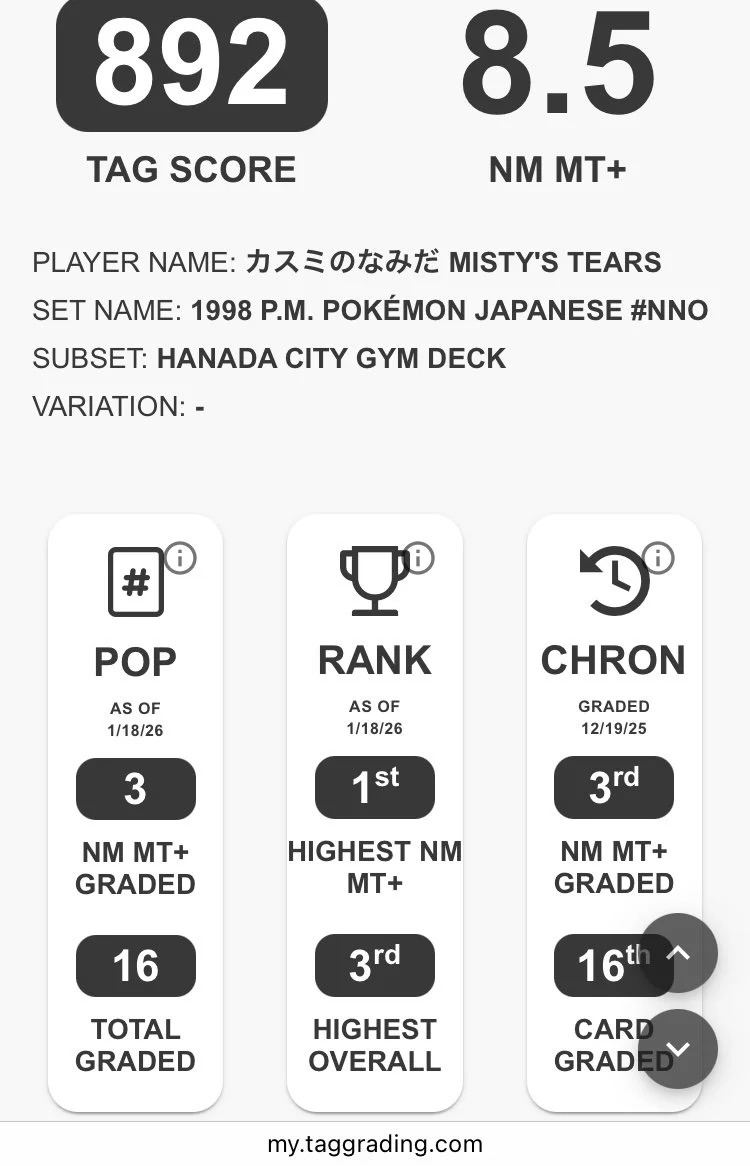
TAG Score & Grade: The overall numeric score (out of 1000) and label (e.g., NM MT+ for Near Mint-Mint Plus). Higher scores mean better condition—focusing on defects that matter most to collectors.
Card Details: Includes Player Name, Set/Subset, Variation. For Misty's Tears: "カスミのなみだ MISTY'S TEARS" from 1998 P.M. Pokémon Japanese #NNO, Hanada City Gym Deck.
Population Data: Shows rarity—how many similar cards are graded. Example: Only 3 NM MT+ graded out of 16 total; this one ranks 1st highest NM MT+ and 3rd overall (as of 1/18/26).
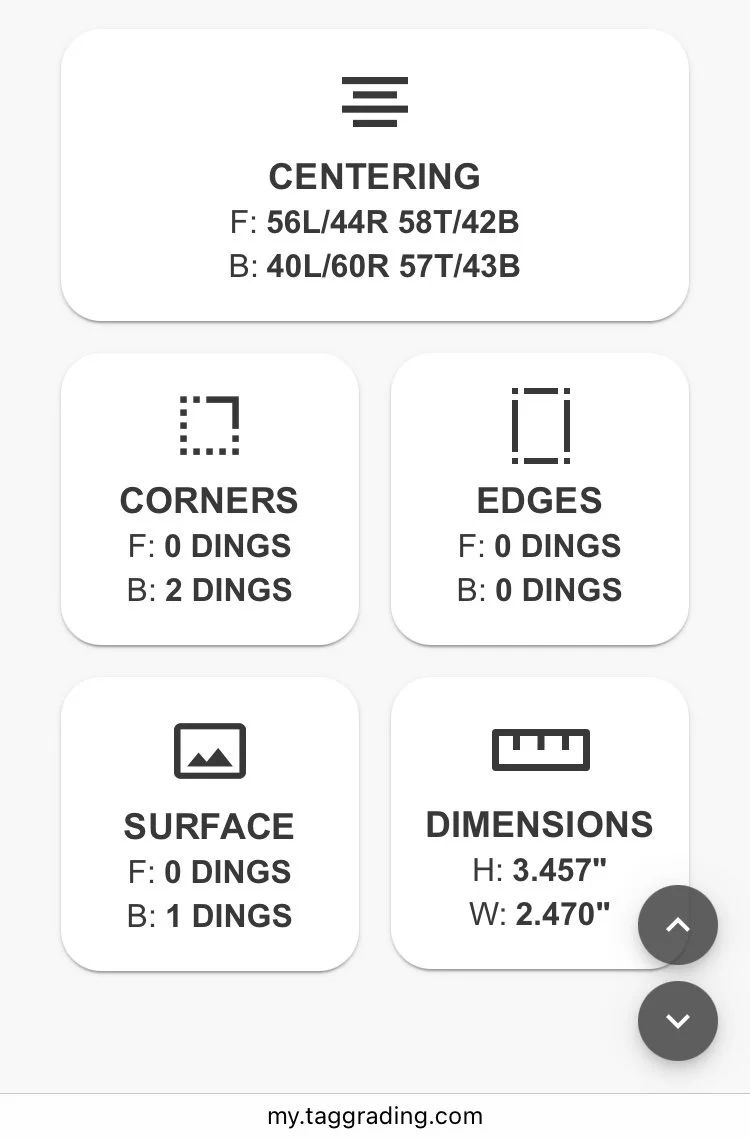
Subgrades: Breaks down Centering, Corners, Edges, Surface. Measured in percentages or dings (defects).
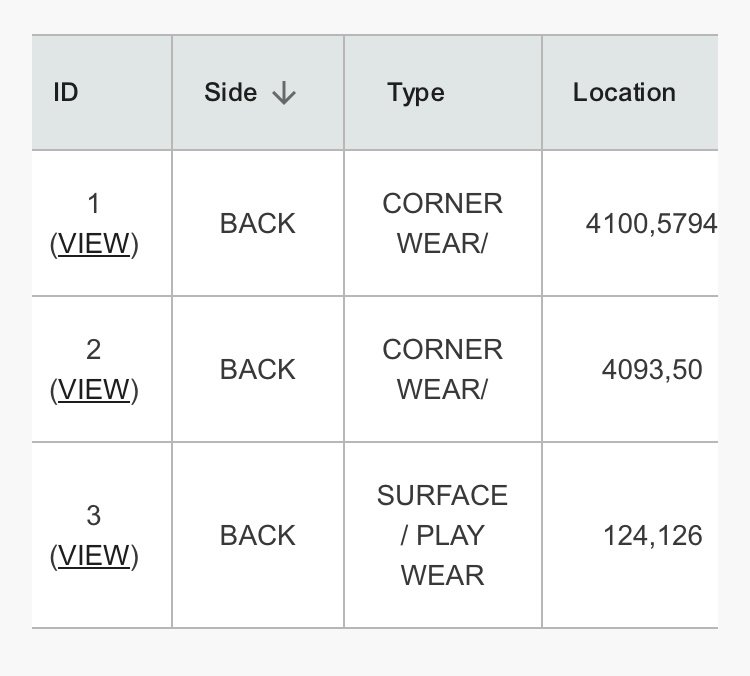
Defects (DINGS): "Defects Identified of Notable Grade Significance"—pinpoints issues like wear with locations and views.
Breaking Down The Example: Misty’s Tears Report:
Now, examine this Misty's Tears report—a high-grade trainer card with beautiful Ken Sugimori artwork and minimal wear. Its 8.5 NM MT+ reflects near-perfect edges and surfaces.
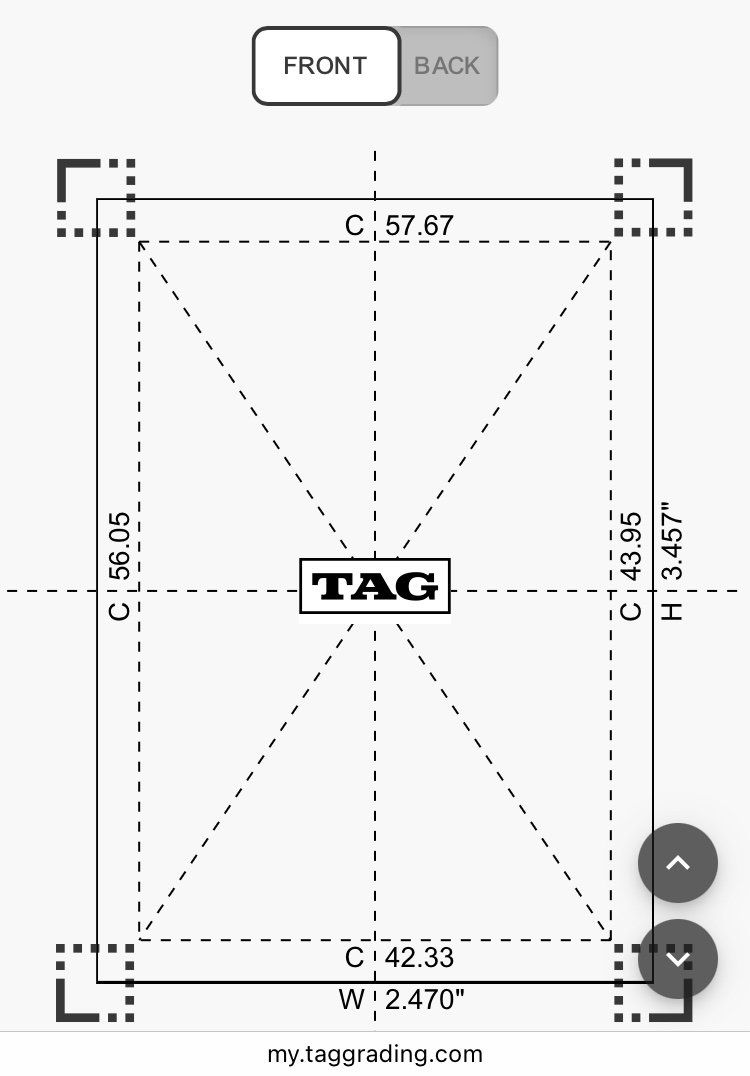
1.Centering: Measures border balance (e.g., Front: 56% Left/44% Right, 58% Top/42% Bottom). This card's slight offset is common in older sets but doesn't hurt its appeal. Back: 40L/60R, 57T/43B.
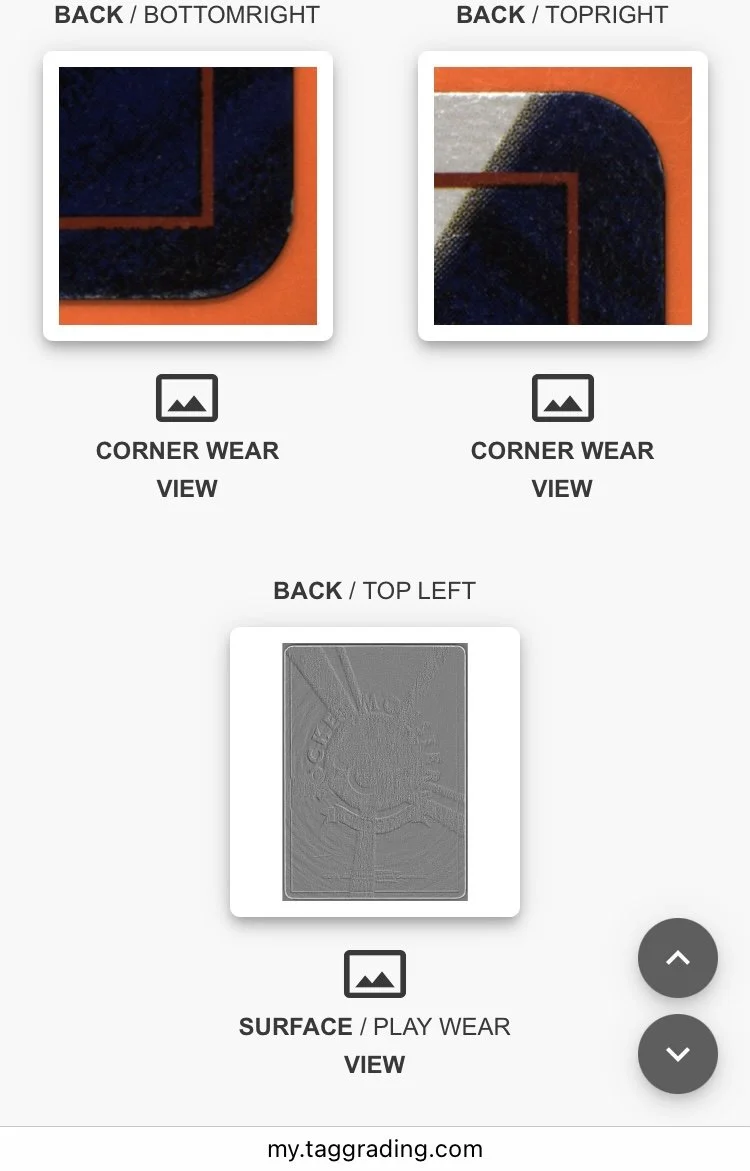
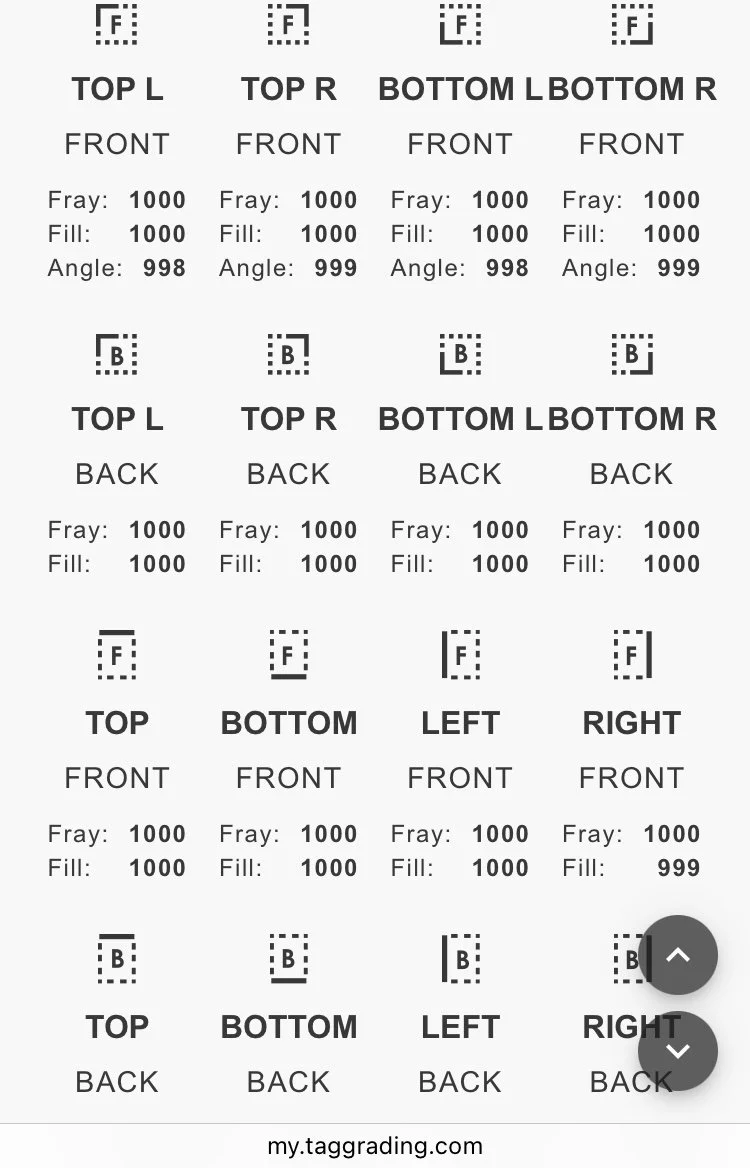
2. Corners & Edges: Scored on Fray (edge wear), Fill (restoration), Angle (sharpness)—all out of 1000. This card scores 998-1000 across fronts/backs, with 0-2 dings (minor corner wear on back).
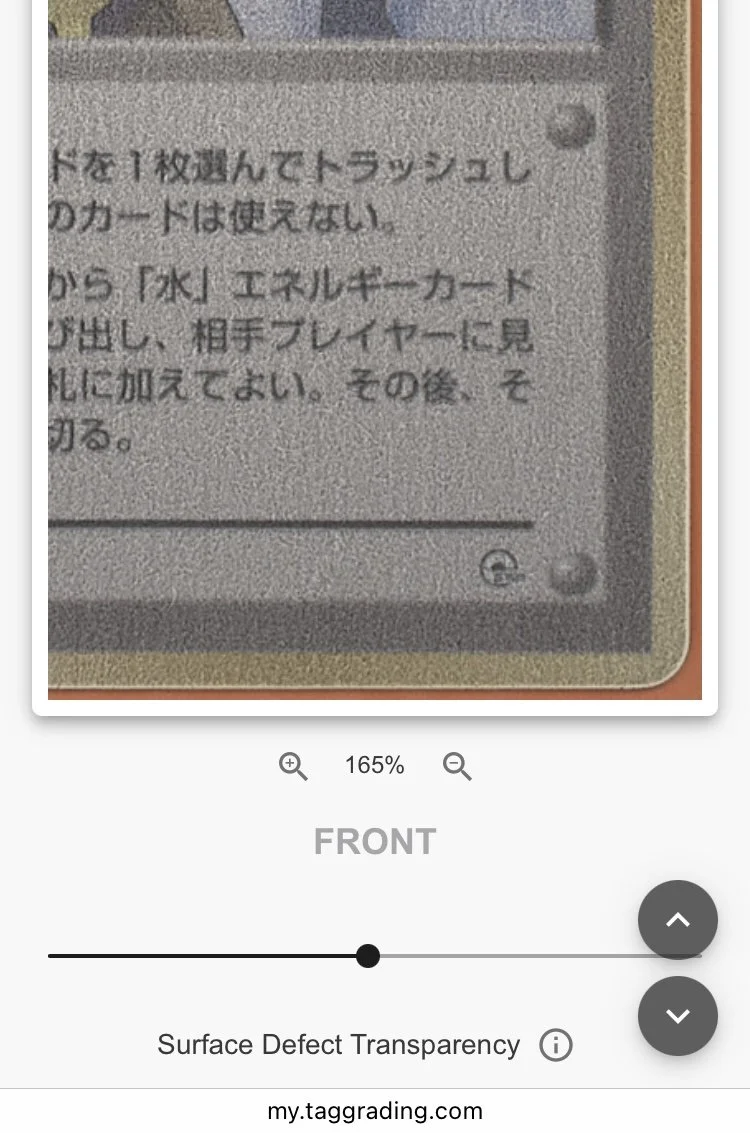
3. Surface: Checks for scratches or play wear. Front: 0 dings; Back: 1 ding (surface/play wear at coordinates 124,126). Use the transparency slider to reveal hidden defects
4. Dimensions: Standard Pokémon size: Height 3.457", Width 2.470". Ensures authenticity—no trimming.
5. Defects Table: Lists IDs, sides, types (e.g., Corner Wear on Back Bottom Right at 4100,5794). Only 3 minor dings here, keeping the score high.
TAG reports deliver transparent, precise details on condition, defects, and rarity—key for authenticating and valuing Japanese Pokémon cards.
Scan for high Fray/Fill/Angle scores (near 1000 = gem-like edges and corners).
Check population data for rarity—low pops (e.g., few NM MT+ or Gem Mint graded) significantly increase value and collector demand.
Evaluate centering qualifications: For Gem Mint 10 (typically TAG Score 950–989), front centering must be ~55/45 or better, and back ~65/35 or better (TCG/Pokémon standards). For the elite Pristine 10 (990–1000), tolerances tighten further to ~51/49 front and ~52/48 back.
These reports give you clear, honest information so you can collect with confidence:)
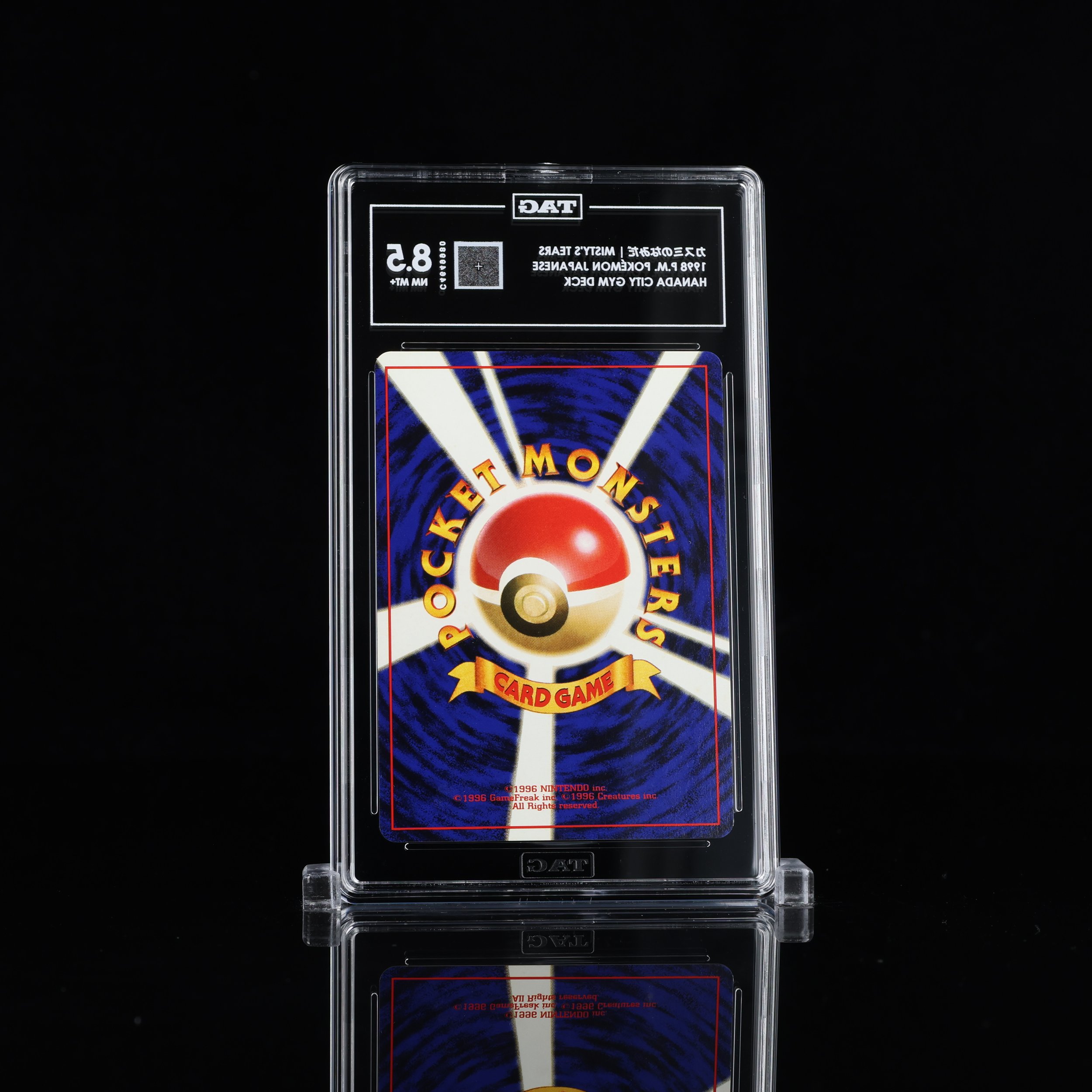
As a collector, these reports build trust—highlighting transparency to overall status and condition