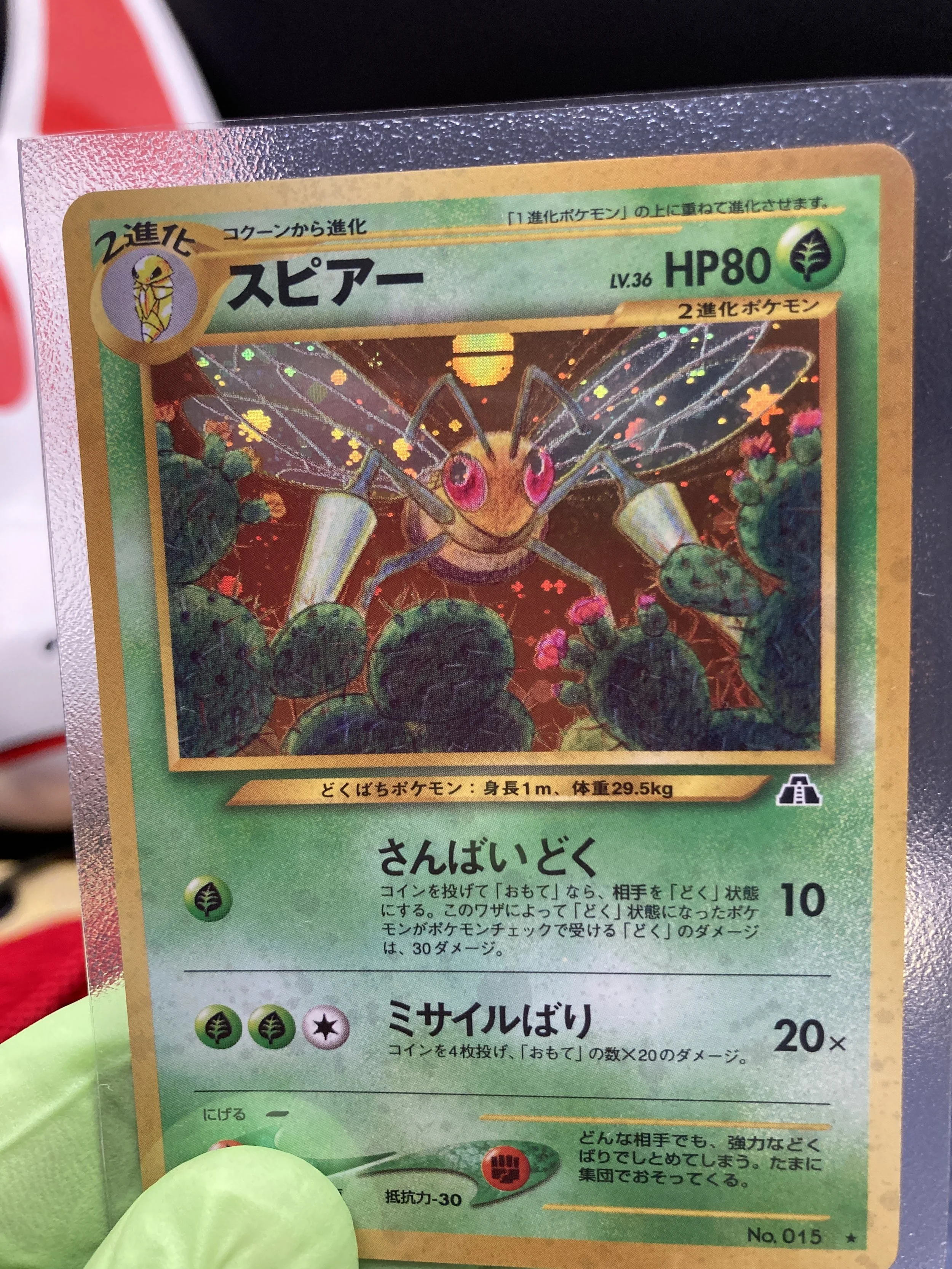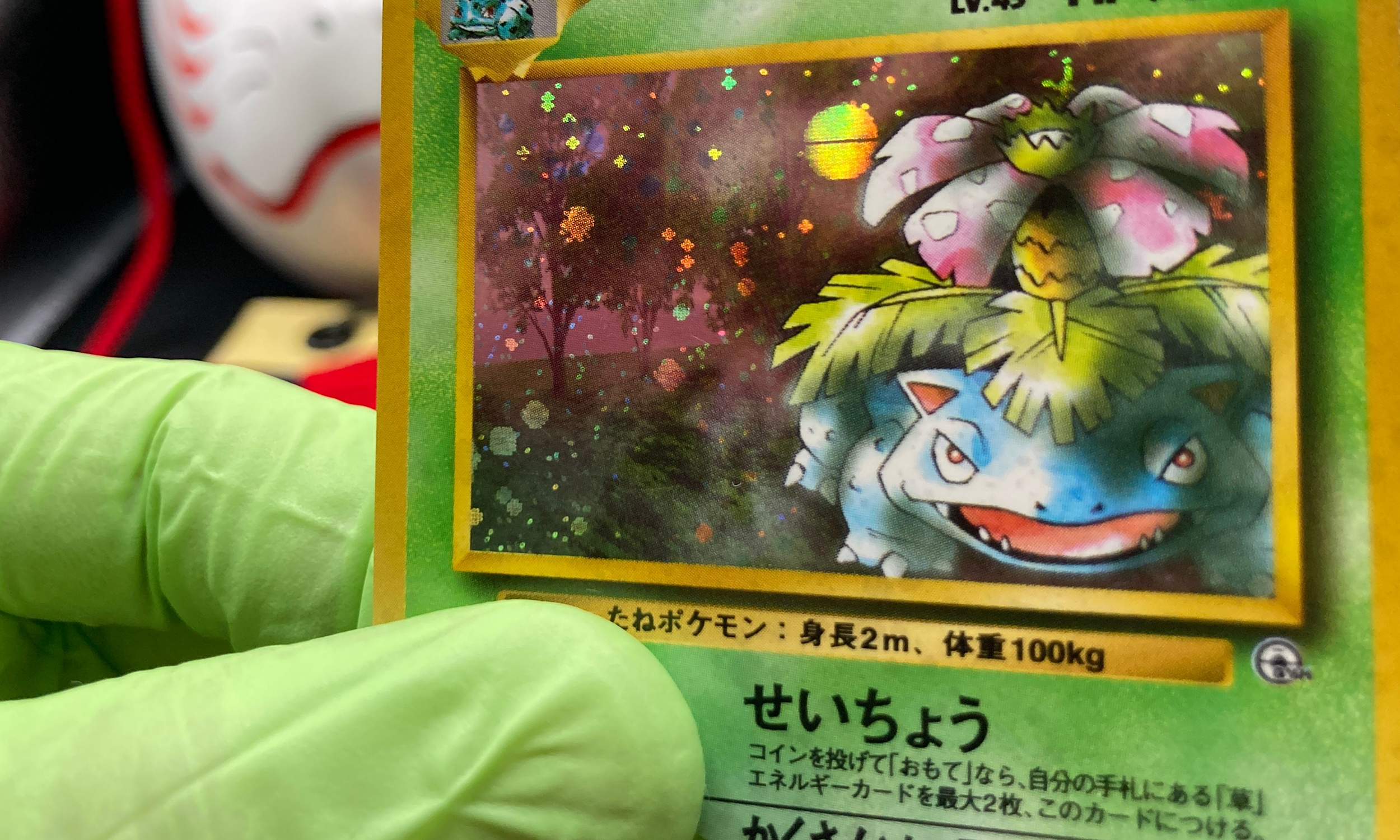


PB Holo Marks aren't always perfect — they come in different shapes and strengths depending on how the foil was pressed. Here are the main types you'll find on vintage Japanese cards, with examples from my own collection.
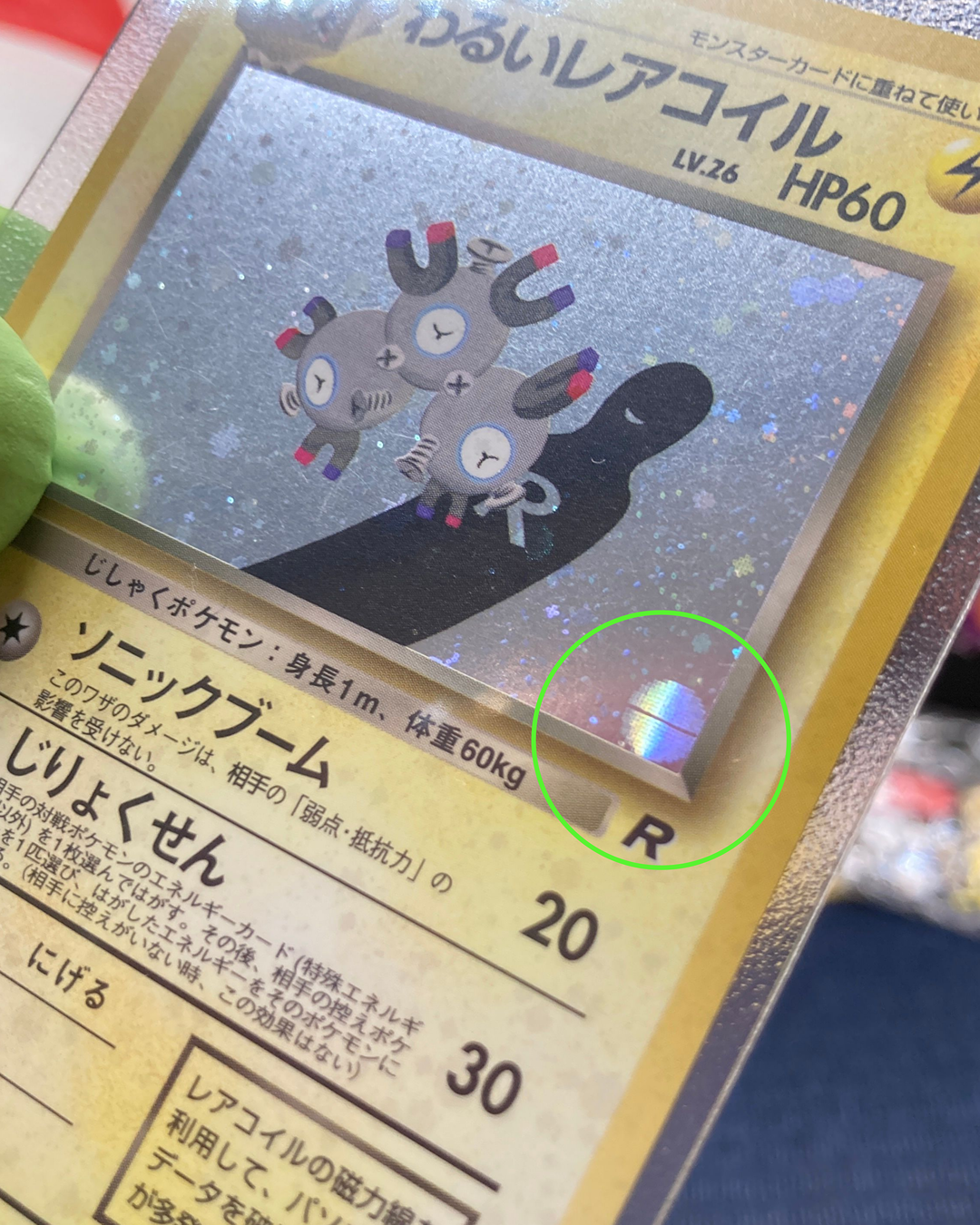
Example 1 - Full PB Holo Mark
• Description: The complete circle with a centered straight dividing line — the true "Poké Ball" illusion. Cleanest, most centered examples are the most desirable.
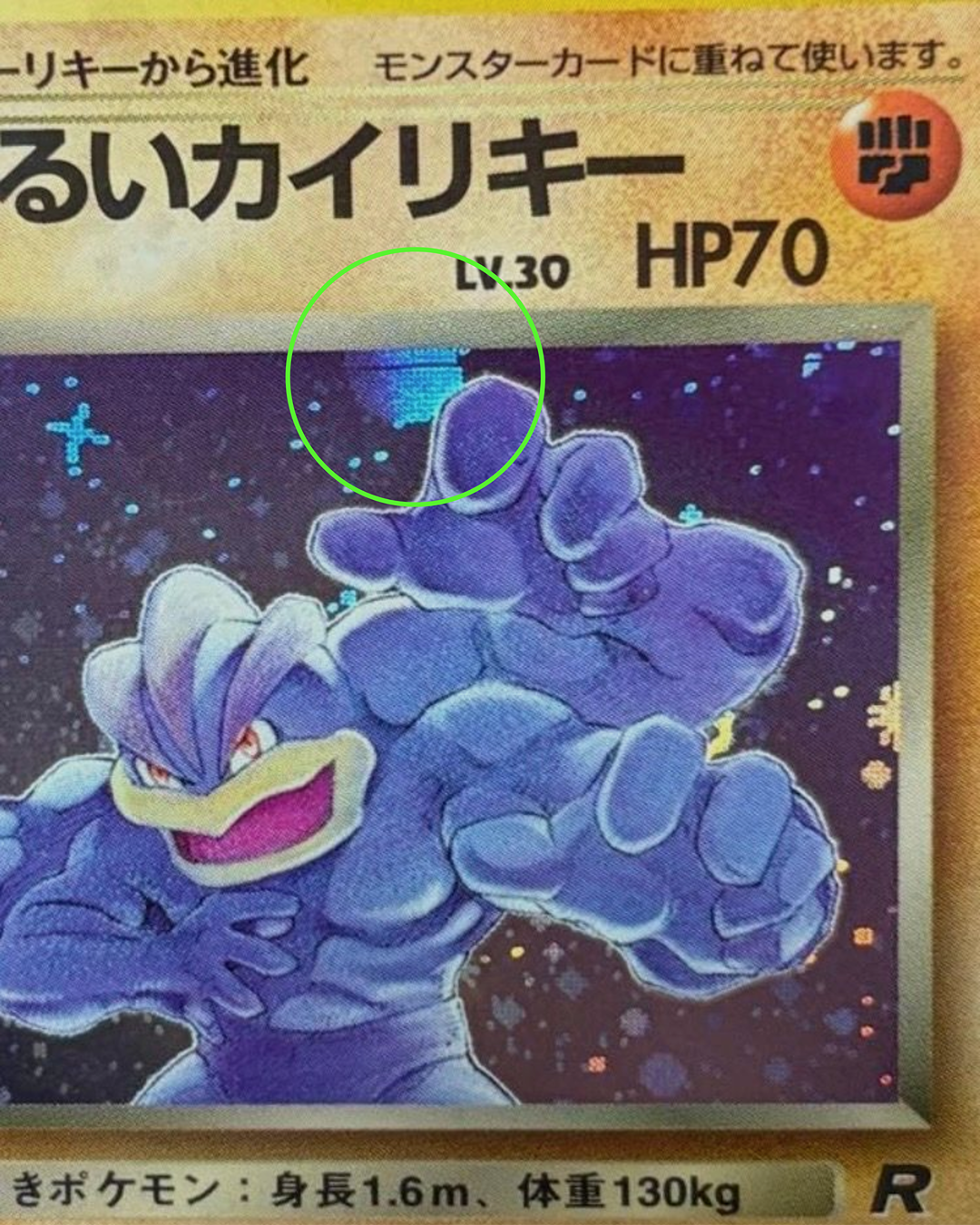
Example 2 - Partial PB Holo Mark
• Description: Halved, quartered, offset, or incomplete versions — still clearly a PB shape but cut off or shifted. Very collectible, especially if the partial circle is sharp.
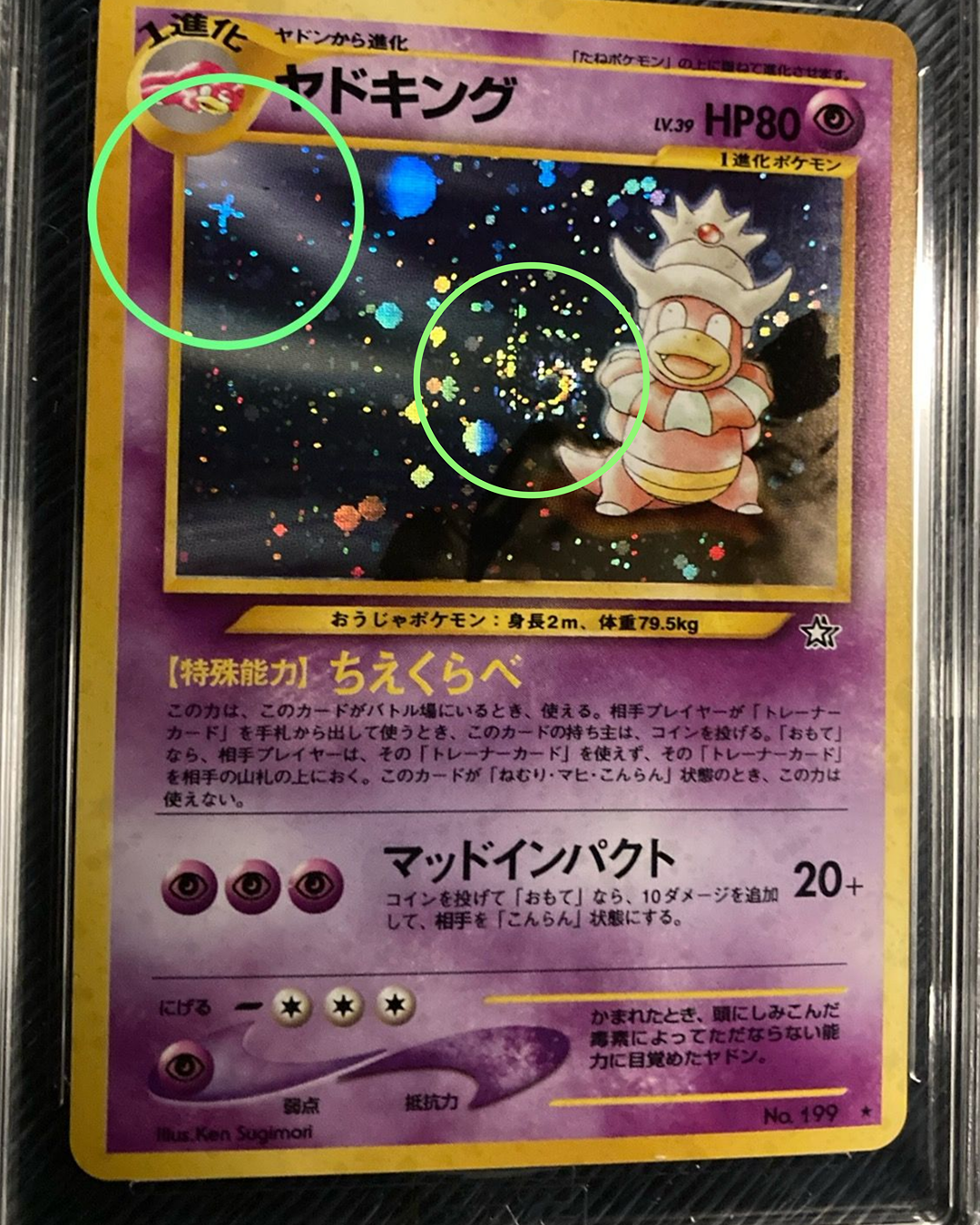
Example 3 - Related Press Marks (non-PB)
• Description: Other common foil-press artifacts from the same era — swirls, cross/X shapes, star-like patterns. Not PB-shaped, but part of the same family of quirks. Included for context so people don't confuse them.
Example 4 - Illusion / Look-Alike
• Circles or round shapes that appear in the artwork or foil pattern itself (not caused by the foil press). At a glance they can look similar to a PB Holo Mark, but they lack the midline and the manufacturing origin that makes the real mark special. These are fairly common and normal — just part of the design or foil — and don't carry the same collector significance. Check out the example 4 video : I show the illusion first (artwork circle only), then a real PB Holo Mark so you can see the key difference yourself.
*Example 1
*Example 2
*Example 4
*Example 3
Full PB Holo Mark -
The Poké Ball Artifact in Vintage Japanese Pokémon Cards
One card completely changed how I look at vintage holos: my childhood #038 Base Set Japanese Ninetales Holo.
I carried that card with me everywhere as a kid — it was my lucky charm. Years later, I tilted it under the light and finally noticed it: a perfect circle with a straight line running through the middle, shaped exactly like a Poké Ball.
It wasn’t random. It was a manufacturing artifact left by the foil press rollers back in the late 1990s. That moment sparked something in me, and I’ve been obsessed with these marks ever since.
Even though some longtime collectors have quietly noticed them, they rarely get talked about. No big forum threads, no official guides. Maybe because they’re so subtle. But to me, they’re a hidden signature of that era — a tiny piece of history pressed into the foil.
That’s why I started calling it the Full PB Holo Mark.
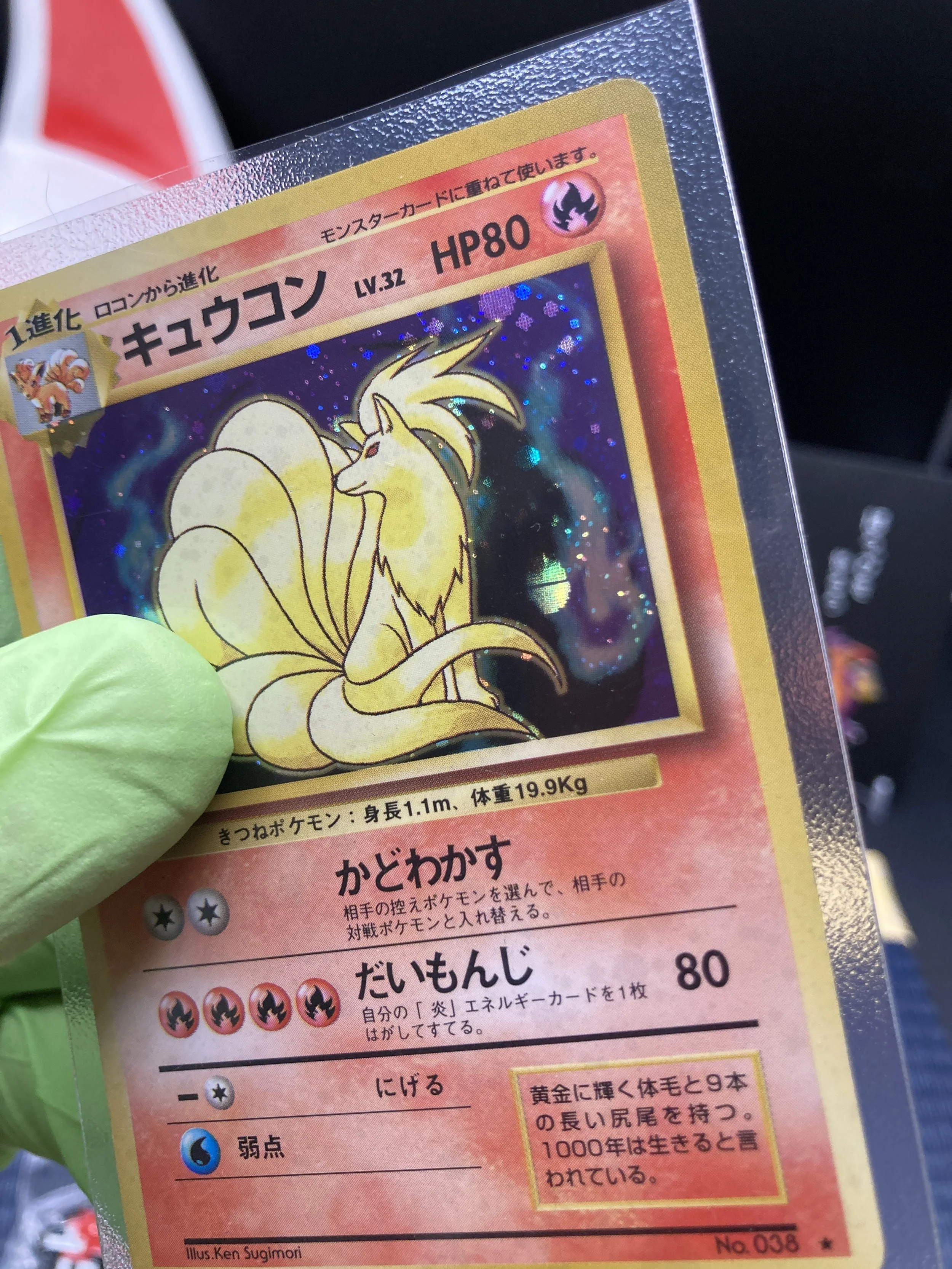
What exactly is a Full PB Holo Mark?
It’s a manufacturing variation created during the foil-stamping process on many Japanese Pokémon cards from the late 1990s to early 2000s. When the foil sheet was pressed, the rollers sometimes left behind a faint circular impression with a straight dividing line through the center — exactly like a Poké Ball.
These marks always appear on the front holo field (usually inside the illustration box). They can vary in size, position, and clarity, but when they’re clean and well-centered, they become something special that collectors quietly treasure.
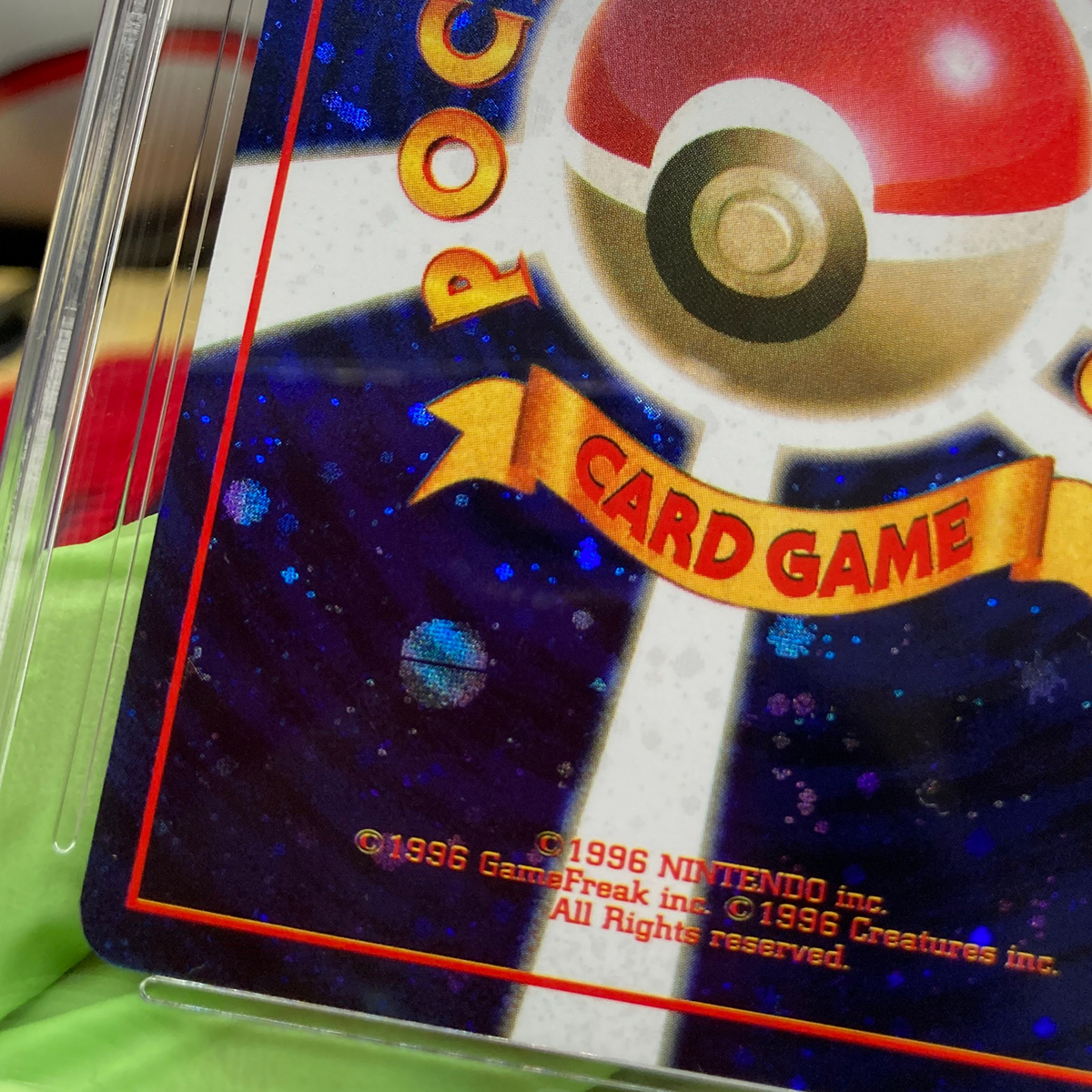
* 1998 Japanese Pokémon Trade Please Holofoil back
Spotting the Variations
PB Holo Marks aren't always perfect — they come in different shapes and strengths depending on how the foil was pressed. Here are the main types you'll find on vintage Japanese cards, with examples from my own collection.
Example 1 - Full PB Holo Mark
• Description: The complete circle with a centered straight dividing line — the true "Poké Ball" illusion. Cleanest, most centered examples are the most desirable.
Example 2 - Partial PB Holo Mark
• Description: Halved, quartered, offset, or incomplete versions — still clearly a PB shape but cut off or shifted. Very collectible, especially if the partial circle is sharp.
Example 3 - Related Press Marks (non-PB)
• Description: Other common foil-press artifacts from the same era — swirls, cross/X shapes, star-like patterns. Not PB-shaped, but part of the same family of quirks. Included for context so people don't confuse them.
Example 4 - Illusion / Look-Alike
• Circles or round shapes that appear in the artwork or foil pattern itself (not caused by the foil press). At a glance they can look similar to a PB Holo Mark, but they lack the midline and the manufacturing origin that makes the real mark special. These are fairly common and normal — just part of the design or foil — and don't carry the same collector significance. Check out the short video below: I show the illusion first (artwork circle only), then a real PB Holo Mark so you can see the key difference yourself.
How to Spot a PB Holo Mark
Spotting a PB Holo Mark is easier than it sounds — you just need good light and a little patience. Here's how to do it:
Lighting is key — Use direct or angled light (a desk lamp, phone flashlight, or window light works great). Avoid flat overhead lighting; tilt the card slowly so the foil catches the beam.
Tilt & rotate — Hold the card at different angles. The mark usually appears or disappears as you change the view — look for the circle to suddenly sharpen and the midline to cut straight through the center.
What to look for — A clear circle with a straight dividing line running through it. When centered and clean, it's a Full PB. Partial versions (halved, quartered, or offset) are still worth noting.
Quick tip — If the mark changes dramatically with angle or lighting, it's likely real. Artwork illusions stay static — no movement.
Give it a try on your own vintage Japanese holos. Sometimes the mark is faint or dark, but once you catch it, you'll start seeing it everywhere.
Once you start spotting them, you can’t unsee them. They add a little extra character and history to the cards we love.
If you ever find a Full PB, Partial PB, or even a tricky illusion on one of your own cards, feel free to reach out or tag us. I’d love to see it and hear your story.
Happy hunting!